|
Venosa 85029 (Potenza) |
 |
Italy - Europe | |
History
291 BC: Venosa becomes a Roman colony, and later (89 BC) a municipium, whose inhabitants enjoy the right to vote and hold citizenship. The village has the good fortune of being one of the main through stations along the Appian Way.
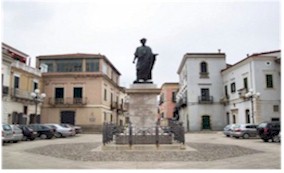
Venosa, the birthplace of the Latin poet Horace There are various hypotheses regarding the origin of its ancient name, Venusia. The most widely accepted holds that the city was founded in honour of Venus, the goddess of love. Others attribute its origin to the village’s abundant and delicious wines (vinosa), others to its many veins of water.
291 BC: Venosa becomes a Roman colony, and later (89 BC) a municipium, whose inhabitants enjoy the right to vote and hold citizenship. The village has the good fortune of being one of the main through stations along the Appian Way.
Venosa, the birthplace of the Latin poet Horace There are various hypotheses regarding the origin of its ancient name, Venusia. The most widely accepted holds that the city was founded in honour of Venus, the goddess of love. Others attribute its origin to the village’s abundant and delicious wines (vinosa), others to its many veins of water.